#11 Musical Instruments As Metaphor In Adeola’s Ni Ile Wa (In Our Land)
UDC: 782
     780.6(669.1)
COBISS.SR-ID 188642057

Received: Oct 10, 2025
Reviewed: Dec 22, 2025
Accepted: Jan 27, 2026
#11 Musical Instruments As Metaphor In Adeola’s Ni Ile Wa (In Our Land)
Citation: Lawal, Hameed Olutoba. 2026. "Musical Instruments As Metaphor In Adeola’s Ni Ile Wa (In Our Land)." Accelerando: Belgrade Journal of Music and Dance 11:11
Abstract
Dance serves as a potent metaphor for Taiye Adeola’s Ni Ile Wa, embodying cultural identity, resistance, and transformation. This study explores the symbolic and narrative functions of dance within the text, and examines how movement and rhythm reflect societal tensions, personal struggles, and communal aspirations. Drawing on theories of performance, embodiment, and postcolonial aesthetics, this paper argues that dance in Ni Ile Wa is not merely an artistic expression, but a language through which characters negotiate power, memory, and belonging. Ultimately, work positions dance as a dynamic force that bridges the past and present, reinforcing cultural heritage while enabling new forms of self-expression.
dance, cultural identity, musical drama, african identity, yoruba drums, talking drum
Introduction
Convocation play of the 39th convocation of the University of Ilorin will sometimes linger in the memory of the audiences, who were for about two hours at the edge of their seats. Without any dull moment, the opera titled Ni Ile Wa (In Our Land) captured political polemics of leadership and followership in Nigeria, which has retarded its progress over the years. Employing the metaphor of Yoruba musical instruments baked up with spectacles of dance steps, colourful costumes, and mesmerising musical dialogue, embedded themes of disunity, greed, and self-aggrandisement resonated with the audience. Written by Taiye Adeola, the musical drama tells the story of a land full of paradoxes: A land blessed but accurate, rich but impoverished, great but incompetent, fertile but famished, suffering, and smiling. The paradoxes are symptomatic of the buffoonery of political leadership and gullibility of the followership in the Nigerian polity, the land in the dramatic universe. In songs and dances that provoked thought, the opera re-enacts the good times the land had enjoyed, and the gradual decline of the land to the present state of impoverishment with the re-occurring questions of how we did get here? How can we make this correct? The constituents of Nigeria are characterised in the musical ensembles of Dundun, Bata, Sekere and Agogo, while the leadership of these groups typifies political leadership, their contention for power, and myopic followership plays out in the dance competition that could be likened to seasonal elections and the mortgaging of the conscience by the electorates.
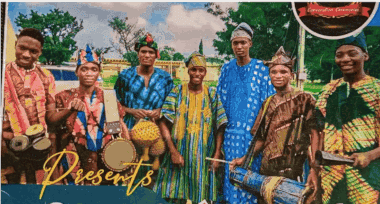
Picture1. Musical ensembles of Dundun, Bata, Sekere and Agogo.
An opera performance
Page-to-stage realisation of the opera was achieved through the medium of musical dialogue backed up with thematic songs and ecstatic dances to rhythmic sounds of the musical ensembles of Dundun, Bata, Sekere and Agogo. The operatic performance was heralded by the festive mood of the town people dancing out from their homes to save the edifying story of Baba Agba. The scenario that could be likened to African tales by the moon light re-enacts the good and bad times of the outgoing season to set the tone for the political transition in Ni Ile Wa (Nigeria). Rehearsals (campaigns) to compete for leadership of the land by the leaders of the musical groups dramatized the resources in the land and the attendant intrigues of seeking political power in the land. While the resources are characterised by the unique qualities of each musical ensemble and their relevance to our cultural heritage, the major cankerworm bedeviling free and fair seasonal election in Nigeria and Africa unfolded in the desperacy of the leader of the Dundun groups bribing the organiser of the competition for favour.
On the competition day (election day), each of the musical groups strive to arrest their attention and win the heart of the umpire (electoral body) and audience with their qualities and peculiarities in rhythm and rendition of scintillating thematic songs. Having compromised the judges with monetary Bait, Bata emerged victorious to the consternation of Dundun and Sekere groups. Another scenario aptly depicted the obsession of African politicians for power and the lack of integrity of agencies saddled with periodic and off-season elections.
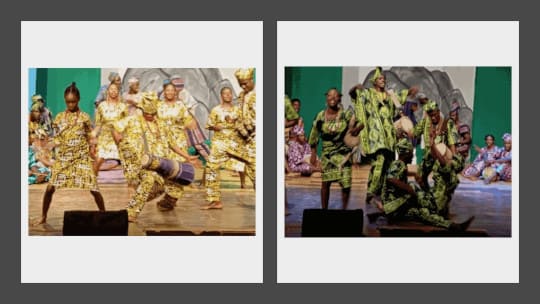
Picture2. Bata celebrating his victory.
Basking in the euphoria of his stolen mandate, Bata became arrogant with power as he terrorised the people. This was satirised by the banditry forceful acquisition of land and women. Repression and oppression of the power drunk leader was choreographed with self-adulating songs and pantomime to the delight of the audience irked by the anti-people and dictatorial tendencies of the leader personified in Bata re-enacts; the people protested with invective songs and dances. This subsequently dictated the choice of judges in another competition dance by Dundun, Bata and Sekere to choose a new leader. To heal the wound of the past and magnanimity in victory, Dundun who emerged as the winner, preached peace and harmony to restore the lost glory in his rendition and dances.
Drama as a powerful metaphor
The tapestry of musical, dramatical, and choreographic styles from traditional and popular darts that signified the endowment and blessings of natural resources enhanced with colourful costumes was spectacular. The harmonious interplay between the trinity of music, drama, and dance in the opera was a testament to the artistry of music director (Taye Adeola), drama directors (Rasheed Adeoye and Tayo Arinde), and the choreographer Felix Akinsinpe.
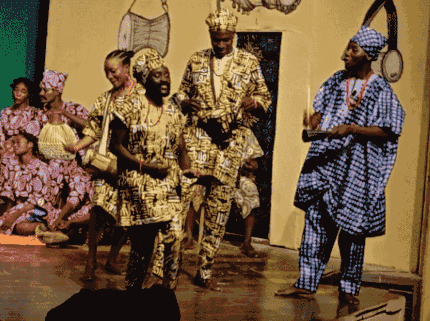
Picture3. Harmonious blend of sekere, bata, and agogo.
Major deductions from this characterisation with drama in the opera Ni Ile Wa was the fact that drama serves as a powerful metaphor that connects the themes of political heritage, identity, and resistance. This Nigerian opera, infused with Yoruba, used drums not only as musical instruments, but also as symbols of communication, unity, and cultural continuity. In Yoruba culture, drums have a sacred connection to ancestors and the spiritual realm in Ni Ile Wa, which represents the heartbeat of the people, linking the characters and the audience to their ancestral roots. Through drum rhythms, characters and audiences alike feel a connection to cultural history, emphasising that heritage is alive and reasonable (Akindele 1986). Drums are often symbols of African identity, and in this opera re-enactments they became a metaphor for resistance against despotic rule and cultural slavery. The drumbeat represented the strength of people in the face of adversity and the assertion of cultural pride. When dancers in Ni Ile Wa responded to the drum, they symbolically resisted oppression and reclaimed their voices.
The drum is not merely a musical instrument in Yoruba culture; it is a tool for communicating messages across distances and gathering people. In opera, these characteristics underscore the themes of community and unity. The rhythm of the drum acts as a call to action, bringing people together to protect and celebrate their shared values, reinforcing a sense of communal responsibility.
Ensslin (1967), Swift (1998), and Zuckerkandl (1956) explored how musical instruments can serve as rich metaphors in drama, enhancing the emotional depth and symbolism within a story. Just as musical instruments express a range of emotions, they symbolise a character’s internal state. For example, a violin might represent sorrow or longing, whereas a drum could symbolise anger or power. A character might be associated with a specific instrument that reflects their personality or emotional journey. Similarly instruments in drama can represent the relationships between characters. The harmonious ensemble of Dundun, Bata and Sekere dramatized in Ni Ile Wa symbolises unity in diversity. Discordant tones represent conflict and tension. The state of music between characters often reflects the nature of their interactions, whether harmonious or fraught with tension.
An instrument requires a certain level of control by drummers, symbolising that a character is needed for control over their life or circumstances. Conversely, improvisation with an instrument can symbolise freedom, creativity, or break away from societal norms. As cultural identity, certain instruments are tied to specific cultures or traditions, and their use in a play can highlight themes of identity, belonging, or alienation. For example, the use of traditional instruments symbolizes connections to heritage, while modern instruments could represent detachment or change.
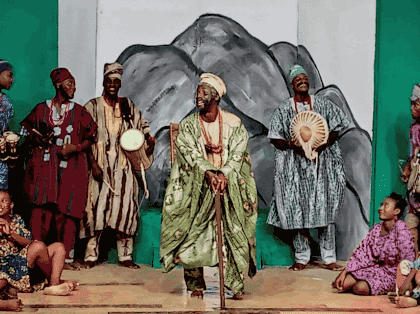
Picture4. Narration that heralds the political drama of drums.
Yoruba heritage
This is typified in the Yoruba drum, which holds a profound cultural identity, as deployed in the opera. Drums embody Yoruba heritage, spirituality, and communication. The talking drums
are important instruments of communication in Traditional African society which serve as the voice of the whole community and communicate the aggregate of their desires. (Ushe 2015)
The Yoruba talking drum (Dundun) is renowned for its ability to mimic human speech tone and inflection. It is used to convey messages, recite proverbs, praise deities or individuals and announce significant events. Historically talking drums were vital for sending messages over long distances. In pre-modern era drums such as Bata drums are closely associated with Sango (the god of thunder) and other deities. Rhythms and beats are used to invoke the presence of gods, ancestors, and spirits during ceremonies. On the other hand, while sekere (maracas) is reserved for royal dance steps of royalties, the gong (Agogo) is the major instrument used by Ogun (god of iron) devotees. The affinity of these instruments to gods and deities affirms their central role in festivals, rites of passage, and divination. In contemporary settings Yoruba drums maintain their relevance in afrobeat music, Nollywood films, international performance symbolising African pride, and heritage.
Conclusion
Yoruba drums are more than musical tools. They are cultural artifacts that embody the soul of Yoruba society, bridging the past and present. They preserve tradition, reinforce identity, and continue to inspire generations, both within and beyond the Yoruba community. Drums in Ni Ile Wa therefore, transcend its musical elements to become a profound metaphor for cultural memory, unity, and resilience. Through these beats, the opera affirms the importance of maintaining identity in a changing world.
References
- Adegbite, Ademola. 1988. "The drum and its role in the Yoruba religion in Africa". Journal of Religion in Africa, Vol. 18(1): 15-26.
- Ademeso, Adebola. 2018. Metaphor in the Drama and Theatre in Nigeria: A Critical Survey. researchgate.net
- Akindele, Femi. 1986. Talking drum is a communication in traditional Africa. Ibadan University Press.
- Baba, Femi. 1990. Yoruba drumming: The Dundun Tradition. E. Breitinger, Bayreuth University. ISBN, 3927510114, 9783927510111
- Esslin, Martin. 1987. The Field of Drama: How the Signs of Drama Create Meaning on Stage and Screen. London: Methuen
- Shaffer, E. 1993. “The Hermeneutic Approach to Theatre and Drama.” In New Directions in Theatre, 34-5. Edited by Julian Hilton. London: Macmillan.
- Ushe Mike 2015. “The Talking Drum: An Inquiry into the Reach of a Traditional Mode of Communication.“ International Journal of Philosophy and Theology. June 2015, Vol. 3(1): 110-117.
- Zuckerkandl, Victor. 1956. Sound and Symbol. Music and the External World. Bollingen Series XLIV. New York: Pantheon Books.
